- FeaturesFeaturesHow it WorksUnderstand the MaxiFi features that help you build your lifetime planRoth Conversion OptimizerMaxiFi helps you optimize conversions and reduce taxesUse CasesHow can you put MaxiFi to use?Life Insurance Contingency PlanningGet peace of mind from life insurance recommendations tailored for youLiving Standard Monte CarloManage your living standard risk with confidence

- ServicesServicesOverviewChoose the right level of support for your plan and needsFlight CheckGet off the ground with comprehensive guidanceCo-PilotElevate your financial plan with one of MaxiFi’s certified financial plannersConcierge ServicePersonal, expert support to make the most of your financial plan
 Flight Check ServiceAsk your questions and make sure your plan is ready for take off with a MaxiFi expertLearn More
 - ResourcesResourcesWebinars and PodcastsExpert tips and guides to help you get the maximum from MaxiFiArticlesIn-depth commentary on the financial planning landscapeBooksFrom the world-renowned economist behind MaxiFiBlogInsights to help you optimize your financesFAQYour most pressing questions answeredFinancial GlossaryKey financial concepts explained in detail

- Why MaxiFiMaxiFiEconomics-Based PlanningHow MaxiFi's economics approach gives you a clear view of your financesCase StudiesReal stories about how MaxiFi helps users make smarter decisionsTestimonialsMaxiFi is trusted by households and experts for clarity and confidenceHow MaxiFi ComparesWith so many tools out there, how do you know MaxiFi is right for you?Press and ReviewsRead expert commentary and critical acclaim for MaxiFi
- Pricing
- AboutCompanyOur VisionThe best person to take control of your financial future is youMedia ResourcesLogos, background information, and media contactsFounder and AdvisorsMeet Laurence Kotlikoff and the visionary MaxiFi teamAffiliate ProgramShare MaxiFi with your audience to help them take control of their financesCareersWhy working at MaxiFi is rewarding, empowering, and impactfulContactQuestions or feedback? Get in touch with the MaxiFi team

Retirement Annuity Guide: Lifetime Income Options for Retirees
For many retirees, the hardest part of retirement planning is not building wealth. It is turning wealth into spending power that can last through an uncertain lifespan. That is where annuity retirement planning enters the conversation. An annuity is not a portfolio strategy or a market forecast. It is a contract that can convert assets into a stream of income, sometimes for life, in exchange for giving up some flexibility. In a world where market returns arrive unevenly and late life expenses can rise quickly, that tradeoff has become more relevant in current retirement discussions.
This topic matters because annuities are often misunderstood. Some people treat them like investments and focus only on quoted rates. Others treat them like pensions and assume guarantees are simple and universal. In reality, annuity outcomes depend on contract design, the timing of income, the insurer’s obligations, and the constraints that come with turning a liquid asset into an income promise. Small design choices can change how much income begins, whether it grows, what happens at death, and how much access remains to principal.
This guide explains annuities as lifetime income tools, not as products to shop for in isolation. It breaks down the main annuity types, how immediate and deferred structures differ, what annuitization actually means, and which income design options matter most for retirees. It also covers how annuities interact with taxes and other income sources, because the net result often depends less on the headline payout and more on coordination across the full retirement plan. The goal is to clarify tradeoffs and mechanics so readers can evaluate annuities with realistic expectations and without relying on rules of thumb.

Key Takeaways
- Retirement annuity planning is about converting assets into income, often to reduce longevity risk and stabilize cash flow.
- Immediate annuity contracts typically start payments soon after purchase, while deferred annuity structures delay income in exchange for higher future payments.
- A lifetime income annuity can provide income for as long as the annuitant lives, shifting longevity risk from the household to the insurer.
- Fixed annuity contracts usually credit interest at a stated or formula-based rate, while variable annuity contracts tie results to market-linked subaccounts and often add layered fees.
- Annuitization options such as life-only, life with a period certain, or joint life can materially change income amounts and survivor protection.
- Once annuitized, an annuity is often difficult to unwind, meaning liquidity is typically reduced compared with a bond or brokerage account.
- Many contracts include surrender schedules that can last several years, which makes timing and flexibility part of the real cost.
- Non-qualified annuity payouts are generally taxed as ordinary income on the earnings portion, not at capital gains rates.
- Qualified annuities held inside retirement accounts may be affected by required distribution rules, which can change taxable income timing.
- Viewing annuities as a pension alternative can help frame what they do well, but it also highlights tradeoffs involving inflation exposure and estate flexibility.
- Simple comparisons based only on quoted rates often miss interactions with taxes, spending needs, and income timing across retirement.
- A disciplined evaluation focuses on the income problem being solved, the contract constraints, and how the annuity coordinates with other retirement income sources.
Why Annuities Matter in Retirement Income Planning
Retirement income planning is fundamentally different from accumulation planning. During working years, uncertainty around market returns is often acceptable because time and continued earnings provide flexibility. In retirement, that flexibility narrows. Spending must be funded year after year, regardless of market conditions or how long retirement lasts. This is the economic problem annuities are designed to address.
Annuities matter because they directly confront longevity risk. No individual knows how long retirement will last, yet most retirement assets are finite. Portfolio based withdrawal strategies must balance spending needs against the risk of depletion, especially when poor market returns occur early in retirement. Annuities approach this problem differently. Instead of attempting to manage uncertainty through withdrawal rules or portfolio adjustments, they pool longevity risk across many individuals and convert assets into income that can continue for life.
Income predictability is the second reason annuities remain relevant. Many retirees value a baseline level of income that is not tied to market performance. Social Security and pensions often serve this role, but not all retirees have sufficient guaranteed income to cover core expenses. Annuities can sometimes supplement these sources by creating a more stable income floor. That stability, however, comes with tradeoffs. Income guarantees typically require giving up liquidity, flexibility, and potential upside. Understanding those tradeoffs is essential before evaluating whether annuities belong in a retirement income plan.
Annuity Retirement Basics
At a structural level, annuity retirement planning involves an exchange. A retiree gives up access to a lump sum of assets in return for a promise of future income. That promise may be fixed or variable, immediate or delayed, temporary or lifelong. What matters is not the label attached to the annuity, but the nature of the exchange being made.
Accumulation and payout phases
Most annuities operate across two phases. During the accumulation phase, assets are contributed to the contract and may earn interest or investment returns. No income is paid during this period. During the payout phase, the contract begins distributing income according to predefined terms. The transition from accumulation to payout is critical because it often determines income level, liquidity, and reversibility.
Immediate annuities largely skip the accumulation phase. Income begins soon after purchase. Deferred annuities emphasize accumulation first, with income starting later. This distinction clarifies why timing matters. The longer income is deferred, the higher future payments can be, but the more uncertainty exists around future needs and conditions.
Guarantees are contractual, not universal
Annuity guarantees exist only within the terms of the contract. They are not market guarantees and they are not government guarantees in the same way Social Security benefits are. Payments depend on the insurer’s obligations and the specific provisions written into the policy. This is why contract details, insurer strength, and state level protections matter. Assuming that all annuities offer the same level of security or flexibility can lead to unrealistic expectations.
Annuity Types Explained
Understanding annuity types helps translate common terminology into actual economic behavior. The differences between types are not cosmetic. They determine how income is generated, how risk is allocated, and how costs are incurred.
Fixed annuity
A fixed annuity credits interest at a stated or formula based rate and does not expose the account value directly to market fluctuations. Income and principal growth are generally predictable within the contract terms. This structure resembles a bond-like instrument inside an insurance wrapper. The tradeoff for stability is limited upside and reduced liquidity during surrender periods.
Immediate annuity
An immediate annuity converts a lump sum into income that begins shortly after purchase. Payments may last for a fixed period or for life. The income level reflects interest rates, life expectancy assumptions, and selected payout options. Immediate annuities are often used to replace or supplement pension income, but they require accepting the loss of principal access in exchange for ongoing payments.
Deferred annuity and lifetime income annuity
Deferred annuities delay income payments, allowing assets to accumulate before payout begins. A lifetime income annuity is a specific form of deferred structure designed to provide income for life once payments start. These contracts are sometimes used to insure against very long lifespans by concentrating income later in retirement. The challenge is balancing future income security against uncertainty around future needs and inflation.
Variable annuity
Variable annuities tie account value and sometimes income to underlying investment subaccounts. They introduce market risk, higher fee structures, and additional complexity. Optional riders may add income guarantees, but those guarantees are priced into the contract and often restrict investment flexibility. Variable annuities behave differently from fixed structures and require careful evaluation of costs and constraints.
Immediate Annuity vs Deferred Annuity
The distinction between immediate and deferred annuities is primarily about timing and purpose. Immediate annuities prioritize income now. Deferred annuities prioritize income later. Neither approach is inherently superior. Each solves a different problem.
Immediate annuities can simplify cash flow by replacing a portion of assets with predictable income. Deferred annuities concentrate income in later years, potentially increasing payments if longevity becomes a concern. The tradeoff is that deferral increases uncertainty. Health, spending needs, and inflation conditions may change before income begins. Evaluating these structures requires thinking about retirement as a timeline rather than a single decision point.
Annuitization Options and Income Design Choices
Once annuitization occurs, income outcomes are shaped by design choices that often receive less attention than headline payout figures.
Life-only and survivor options
Life only payments maximize income but stop at death. Survivor options reduce income in exchange for continuing payments to a spouse or beneficiary. These choices affect both income level and household protection. They also reflect differing priorities between maximizing cash flow and preserving income continuity.
Inflation treatment
Some annuities offer payments that increase over time, while others provide level income. Inflation protection reduces initial income but preserves purchasing power. Without adjustment, fixed payments may lose real value over long retirements. Inflation treatment is therefore a central design decision rather than a minor feature.
Liquidity and surrender constraints
Annuitization typically limits access to principal. Many contracts also impose surrender charges during early years. These constraints are part of the cost of guarantees. Understanding how much flexibility is being surrendered is as important as understanding how much income is being gained.
Guaranteed Income Retirement and the Pension Alternative Question
Annuities are often described as pension alternatives because they can provide steady income over time. This framing is useful, but incomplete. Unlike traditional pensions, annuities usually require an explicit tradeoff between income and liquidity. They also place more responsibility on the individual to choose payout options and manage coordination with other income sources.
Viewing annuities as pension alternatives helps clarify their role, but it should not obscure their limitations. The decision is not whether annuities are good or bad, but whether exchanging assets for guaranteed income aligns with household priorities and risk tolerance.
Taxes and Coordination With Other Retirement Income
Annuities do not exist in isolation. Their impact depends on how they interact with taxes and other income streams.
Qualified vs non-qualified annuities
Annuities held inside retirement accounts follow the tax rules of those accounts. Non-qualified annuities are funded with after tax dollars, and only the earnings portion of each payment is taxable. This distinction affects after tax income and timing.
Required distributions and income timing
When annuities are held inside retirement accounts, required distribution rules can influence when income must be taken and how it is taxed. This can change net outcomes even if gross income appears stable.
Interaction with Social Security and Medicare premiums
Additional taxable income from annuities can affect the taxation of Social Security benefits and Medicare premium thresholds. These interactions mean that income coordination matters as much as income amount.
Risks and Tradeoffs Sophisticated Retirees Should Understand
Annuities reduce some risks while introducing others. Evaluating them requires a balanced view.
Insurer credit risk
Income guarantees depend on insurer solvency. While state guaranty associations provide some protection, coverage limits vary and are not a substitute for due diligence.
Fee and complexity risk
Fees, riders, and contract complexity can materially affect outcomes. Higher guarantees usually come with higher costs or reduced flexibility. Understanding net results matters more than advertised features.
Modeling Lifetime Tradeoffs Without Rules of Thumb
Simple comparisons often fail to capture how annuities function within a retirement system. Comparing an annuity payout to a bond yield or withdrawal rate ignores taxes, longevity, timing, and coordination with other income sources. A systems based approach evaluates how decisions interact over time rather than isolating one metric.
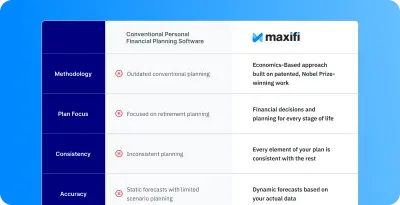
In complex situations, some retirees use comprehensive financial planning software such as MaxiFi to model how annuities, Social Security, taxes, spending, and investment returns interact across a lifetime. The value of such modeling lies in illustrating tradeoffs and uncertainty, not in producing a single answer.
Financial Planning that Puts You in Control
Frequently Asked Questions About Retirement Annuities and Lifetime Income
Important Considerations
The discussion in this guide reflects current understanding of annuity structures and retirement income design as of 2026, where timing or regulatory context matters. Examples and scenarios are illustrative and intended to clarify mechanics rather than suggest specific actions. Retirement income outcomes can vary widely based on individual factors such as health and longevity expectations, the mix and timing of income sources, tax treatment, policy changes, and ongoing spending patterns. Because annuities involve long-term commitments, their impact is best understood in relation to the full retirement picture rather than as stand-alone decisions.
Annuities highlight a broader reality of retirement planning. Long-term income decisions involve tradeoffs between certainty and flexibility, current income and future protection, and simplicity and customization. Simplified comparisons, headline payout figures, or isolated rules of thumb may overlook important interactions across income streams and time horizons. In more complex situations, comprehensive financial planning software such as MaxiFi can illustrate how annuity income interacts with taxes, Social Security, savings, and spending over a lifetime, helping frame these tradeoffs without implying a single right answer.
Disclaimer
This article provides general educational information only and does not constitute legal, tax, or estate planning advice. Beneficiary designations, estate laws, and tax regulations vary significantly by state, account type, and individual circumstances. The information presented here is not intended to be a substitute for personalized legal or financial advice from qualified professionals such as estate planning attorneys, tax advisors, or financial planners. Beneficiary rules are subject to change and can have significant legal and tax implications. Before designating, changing, or making decisions about beneficiaries, you should consult with appropriate professionals who can evaluate your specific situation and applicable state and federal laws.