- FeaturesFeaturesHow it WorksUnderstand the MaxiFi features that help you build your lifetime planRoth Conversion OptimizerMaxiFi helps you optimize conversions and reduce taxesUse CasesHow can you put MaxiFi to use?Life Insurance Contingency PlanningGet peace of mind from life insurance recommendations tailored for youLiving Standard Monte CarloManage your living standard risk with confidence

- ServicesServicesOverviewChoose the right level of support for your plan and needsFlight CheckGet off the ground with comprehensive guidanceCo-PilotElevate your financial plan with one of MaxiFi’s certified financial plannersConcierge ServicePersonal, expert support to make the most of your financial plan
 Flight Check ServiceAsk your questions and make sure your plan is ready for take off with a MaxiFi expertLearn More
 - ResourcesResourcesWebinars and PodcastsExpert tips and guides to help you get the maximum from MaxiFiArticlesIn-depth commentary on the financial planning landscapeBooksFrom the world-renowned economist behind MaxiFiBlogInsights to help you optimize your financesFAQYour most pressing questions answeredFinancial GlossaryKey financial concepts explained in detail

- Why MaxiFiMaxiFiEconomics-Based PlanningHow MaxiFi's economics approach gives you a clear view of your financesCase StudiesReal stories about how MaxiFi helps users make smarter decisionsTestimonialsMaxiFi is trusted by households and experts for clarity and confidenceHow MaxiFi ComparesWith so many tools out there, how do you know MaxiFi is right for you?Press and ReviewsRead expert commentary and critical acclaim for MaxiFi
- Pricing
- AboutCompanyOur VisionThe best person to take control of your financial future is youMedia ResourcesLogos, background information, and media contactsFounder and AdvisorsMeet Laurence Kotlikoff and the visionary MaxiFi teamAffiliate ProgramShare MaxiFi with your audience to help them take control of their financesCareersWhy working at MaxiFi is rewarding, empowering, and impactfulContactQuestions or feedback? Get in touch with the MaxiFi team

Immediate Annuity
An immediate annuity is a type of insurance contract that provides a guaranteed stream of income payments starting shortly after a lump-sum investment is made. Typically purchased with retirement savings, it converts accumulated assets into predictable income that begins within a year of purchase. This makes an immediate annuity especially valuable for retirees seeking to manage longevity risk and secure reliable monthly income that lasts throughout retirement.
The structure of an immediate annuity is straightforward: the individual (annuitant) pays a single premium to an insurance company, which then begins issuing periodic payments, often for life or for a set number of years. Key factors influencing payment size include the amount invested, interest rates, the annuitant's age, gender (where permitted by state law), and whether the annuity includes survivor or refund options.
This guide explores how immediate annuities work, the main types available, payout options, tax considerations, and how they compare with deferred annuities. Whether evaluating ways to create steady post-retirement income, converting savings into lifetime payments, or exploring protection against market volatility, understanding immediate annuities helps individuals make informed financial decisions.

Key Takeaways
- An immediate annuity is a contract that provides guaranteed income payments starting within one year of purchase.
- Immediate annuities convert savings into steady income, helping retirees manage cash flow and cover essential living expenses.
- Payments from an immediate annuity are based on the premium amount, the annuitant's age, gender (where state law permits), and current interest rates.
- Insurance companies guarantee payments, offering predictable income that can last for life or a fixed term.
- Immediate annuities reduce longevity risk, ensuring retirees do not outlive their assets.
- Single premium immediate annuities (SPIAs) are the most common type, funded by a one-time lump-sum payment.
- Payout options may include lifetime income, joint-life coverage for couples, or fixed-period payments.
- Tax treatment of immediate annuities depends on the funding source; payouts from pre-tax accounts are taxed as ordinary income.
- Once annuitized, funds become permanently inaccessible except during the state-mandated free-look period (typically 10-30 days after purchase).
- Immediate annuities trade investment flexibility and market growth potential for guaranteed lifetime income security.
- Interest rates are locked at purchase with no opportunity to benefit from future rate increases.
- Immediate annuities differ from deferred annuities, which delay income payments to a future date.
What Is an Immediate Annuity?
An immediate annuity is a financial product designed to transform a lump sum of money into a reliable stream of income payments that start almost immediately, typically within 30 days to one year after purchase. It is most commonly used by retirees who wish to convert their retirement savings into guaranteed income for life. The insurance company assumes the investment and longevity risk, providing predictable cash flow that continues for the duration of the contract or the annuitant's lifetime.
The mechanics of an immediate annuity are straightforward. The buyer (annuitant) pays a single premium payment to an insurer, who in return calculates a payment schedule based on several factors, including the annuitant's age, gender (where permitted by state law), interest rate environment, and payout structure. Payments can be set up to last for a fixed number of years (known as a period certain annuity) or for the lifetime of one or two individuals (known as a life annuity or joint-life annuity). Because income begins right away, this product is especially useful for individuals transitioning from accumulation to income in retirement.
There are two main types of immediate annuities: fixed and variable. A fixed immediate annuity provides steady, predictable payments that do not change over time, making it ideal for conservative retirees seeking stability.
A variable immediate annuity, on the other hand, allows payments to fluctuate based on the performance of selected investment subaccounts, offering growth potential but also exposing the annuitant to market risk. SEC and FINRA have issued warnings emphasizing that variable annuities involve significant complexity and typically higher fees than fixed alternatives. Understanding this distinction helps investors choose the type that best matches their risk tolerance and income goals.
The concept of an immediate annuity ties closely to longevity planning, as it ensures a consistent income stream even in extended retirement years. By integrating immediate annuities into an overall retirement income strategy, individuals can secure a balance between guaranteed income and investment flexibility.
How an Immediate Annuity Works
1. Purchasing the Annuity
An immediate annuity begins when an individual makes a one-time lump-sum payment to an insurance company. This amount, called the premium, is exchanged for a guaranteed stream of income payments that start within 12 months of purchase. The insurer uses actuarial calculations based on life expectancy, interest rates, and selected payout options to determine the payment amount. Because income begins quickly, this product is most commonly purchased at or near retirement age.
2. Key Participants and Roles
Several parties are involved in an immediate annuity contract:
- Annuitant: The individual whose life expectancy determines payment duration.
- Owner: The person who funds the annuity and controls contract terms (often the same as the annuitant).
- Beneficiary: The recipient of remaining payments if the annuitant passes away during a guaranteed payout period.
- Insurance Company: The entity responsible for issuing and guaranteeing payments according to the contract.
Understanding these roles ensures clarity in how ownership rights, income guarantees, and beneficiary benefits are structured.
3. Step-by-Step Payment Process
Once the immediate annuity is purchased, the payment process unfolds as follows:
- Select the payout option: Choose between life-only, joint-life, or period-certain structures.
- Submit the premium: Provide a lump-sum amount to the insurer for annuitization.
- Set the start date: Payments begin within 30 days to one year after contract initiation.
- Receive regular income: The insurer sends periodic payments, monthly, quarterly, or annually, as specified.
- Continue payments per contract: Payments persist for the chosen term or the annuitant's lifetime.
This predictable process helps retirees replace variable investment returns with guaranteed income for stable financial planning.
4. Payment Options and Features
Immediate annuities offer flexibility through different payment options tailored to personal needs:
- Life-Only Annuity: Pays income for the annuitant's lifetime, stopping at death.
- Joint-Life Annuity: Provides payments as long as either spouse is alive.
- Period-Certain Annuity: Guarantees income for a fixed period, even if the annuitant dies early.
- Life with Refund Option: Ensures the beneficiary receives any remaining balance if total payments are less than the initial premium.
Each option impacts payout size and total income received, allowing individuals to align annuity design with their financial goals and family circumstances.
5. Tax Treatment
The taxation of immediate annuity payments depends on how the contract is funded. If purchased with pre-tax dollars (such as from a 401(k) rollover), payments are taxed as ordinary income. If funded with after-tax savings, only the earnings portion of each payment is taxable; the rest is considered a return of principal. The exclusion ratio, a calculation used by the IRS, determines what portion of each payment is taxable. An important exception exists for life annuities purchased before age 59½: when structured as a single premium immediate annuity with substantially equal lifetime payments starting within one year, the 10% early withdrawal penalty may not apply under IRC Section 72(q)(2). The exception requires payments made at least annually for life or life expectancy and does not apply to period-certain annuities or if the payment structure fails to qualify under IRS rules.
Additionally, for non-qualified annuities funded with after-tax dollars, high-income retirees may owe the 3.8% Net Investment Income Tax (NIIT) on the earnings portion of payments if Modified Adjusted Gross Income exceeds $200,000 (single) or $250,000 (married filing jointly). Understanding these rules helps retirees plan efficient tax strategies for their retirement income.
Immediate Annuity vs Deferred Annuity: Key Differences Explained
The following comparison highlights the main distinctions discussed in retirement income planning, showing how immediate annuities and deferred annuities differ in timing, purpose, and income structure.
A common source of confusion involves Qualified Longevity Annuity Contracts (QLACs), which are deferred annuities, not immediate annuities. QLACs delay payments until age 70-85, making them fundamentally different from immediate annuities that begin payments within one year. While QLACs offer RMD exclusions and (as a deferred annuity product) are limited to $210,000 in contributions for 2025 (indexed annually), they involve significant considerations discussed in financial planning literature. MaxiFi founder Larry Kotlikoff has noted that QLACs exchange real dollars today for nominal dollars paid decades later, exposing purchasers to substantial inflation risk that can erode purchasing power. Additionally, concentrating taxable income into later years may push retirees into higher tax brackets, potentially offsetting the perceived tax advantages. The mortality risk is also material, as individuals may not survive to receive payments. These complexities illustrate why comprehensive financial planning software like MaxiFi that models inflation, tax brackets, and longevity scenarios across different strategies can provide more nuanced analysis than evaluating any single product in isolation.
Types of Immediate Annuities
Immediate annuities come in several variations, each designed to meet unique retirement income goals and levels of risk tolerance. Understanding these types helps investors choose the structure that aligns with their financial needs, inflation expectations, and comfort with market exposure.
Fixed Immediate Annuity: Provides guaranteed, level payments for life or a set period. The insurer bears all investment risk, ensuring predictable income unaffected by market performance. This type is ideal for retirees seeking security and stability in their monthly income.
Variable Immediate Annuity: Links payments to the performance of selected investment subaccounts, such as mutual funds. Payments may rise or fall depending on market results, offering growth potential but introducing more risk. This option suits retirees comfortable with market fluctuations who want to preserve purchasing power over time.
Indexed Immediate Annuity: Combines features of both fixed and variable products. Returns are tied to a market index like the S&P 500, offering partial participation in market gains while protecting against losses through a minimum guaranteed rate. It's suitable for those seeking moderate growth with downside protection.
Inflation-Protected Immediate Annuity: Adjusts annual payments based on official inflation data, helping preserve real income value as the cost of living rises. Though initial payouts may start lower, the long-term benefit is maintaining purchasing power throughout retirement.
Each annuity type offers a distinct trade-off between income stability and growth potential, allowing retirees to select a balance that fits their personal financial goals and risk comfort level.
Cost and Fees Overview
While immediate annuities are generally straightforward, understanding their cost structure is important before purchase. The primary expense is embedded within the annuity's pricing and payout calculation, meaning buyers don't see itemized fees. The insurance company factors in administrative costs, profit margins, and market interest rates when determining payout levels. As a result, higher costs or lower market rates can reduce the total monthly income an investor receives.
Optional riders can also influence cost and payout. Common add-ons include inflation adjustments, guaranteed minimum payments, or survivor benefits for spouses. Each rider provides valuable protection but typically lowers the base payment because it increases the insurer's long-term obligation. Comparing quotes from multiple insurers and reviewing disclosure documents helps individuals understand how fees and options impact their overall retirement income strategy.
Advantages and Considerations
Immediate annuities offer several clear benefits, including predictable income, simplicity, and protection against longevity risk, the danger of outliving one's savings. They provide peace of mind by guaranteeing regular payments regardless of market fluctuations or economic conditions.
However, it's equally important to weigh the trade-offs. Buyers give up liquidity once funds are annuitized and may face limited flexibility if financial needs change. However, most states provide a "free look" or cooling-off period, typically 10-30 days after purchase, during which buyers can cancel the contract and receive a full refund. This consumer protection allows time to review the contract terms and ensure the annuity aligns with financial goals before the commitment becomes irrevocable. Payout rates can also vary based on interest rate environments and the issuing insurer's pricing assumptions.
Evaluating product features, comparing quotes from multiple insurance companies, and consulting a financial advisor can help determine whether an immediate annuity fits within a broader retirement income strategy.
Limitations to Consider
While immediate annuities provide guaranteed income, several important limitations should be carefully evaluated before purchase:
Liquidity and Access
Once funds are annuitized, they become permanently inaccessible. The lump-sum investment cannot be withdrawn for emergencies, medical expenses, or long-term care needs. After the free-look period closes, accessing funds triggers substantial surrender charges (often 6-10% in the first year, declining over 5-10 years) plus potential IRS penalties if withdrawn before age 59½.
Inflation Risk
Fixed immediate annuities pay the same dollar amount throughout the contract period, meaning purchasing power erodes over time. A $3,000 monthly payment in 2025 may only provide approximately $2,000 worth of purchasing power by 2045 if inflation averages 2-3% annually. Inflation-protection riders are available but typically reduce initial payments by 20-40%, requiring retirees to trade current income for future purchasing power preservation.
Mortality and Early Death
Single-life annuities without refund provisions provide no residual value to heirs if the annuitant dies early. For example, a $200,000 premium generating $15,000 annually becomes worthless to beneficiaries if death occurs after only a few years, with actuarial breakeven points often extending into the early-to-mid 90s for many purchasers. Adding survivor benefits or period-certain options typically reduces monthly income by 10-20%. Those in poor health or with family histories of shorter lifespans may never recover their initial investment.
Rate and Timing Risk
Interest rates are locked at purchase. If rates rise afterward, annuitants remain fixed at lower payout levels with no opportunity to adjust. Purchasing during low-interest-rate environments permanently reduces lifetime income potential. Payout rates vary significantly based on the annuitant's age, gender (where permitted by state law), contract terms, and the prevailing interest rate environment at the time of purchase. Because Federal Reserve policy and market conditions affect available rates, it is essential to obtain current quotes from multiple insurers before making a purchase decision.
Opportunity Cost
Funds committed to immediate annuities cannot participate in market growth or capital appreciation. Once annuitized, the principal is converted into a guaranteed income stream rather than remaining available for investment in assets with potential for higher returns. While immediate annuities provide income security and eliminate market risk, this protection comes at the cost of forgoing potential gains from diversified stock portfolios or other investment strategies that may generate higher returns over extended periods. Retirees sacrifice investment flexibility and potential wealth accumulation for the certainty of guaranteed lifetime income.
Suitability and Financial Planning Fit
An immediate annuity may be best suited for retirees who need guaranteed lifetime income and want to reduce exposure to market volatility. It works particularly well for individuals without a pension or those seeking to supplement Social Security benefits. Because payments begin soon after purchase, this product serves as a bridge between retirement and long-term income security.
From a financial planning perspective, immediate annuities fit into a diversified retirement strategy by providing a stable income floor. Pairing them with investments such as bonds, dividend-paying stocks, or deferred annuities allows retirees to balance income stability with liquidity and growth potential. However, since funds used to purchase the annuity are no longer accessible, it is essential to maintain an emergency reserve or liquid assets for unexpected expenses. Evaluating personal income needs, tax situation, and life expectancy helps determine whether an immediate annuity aligns with long-term goals.
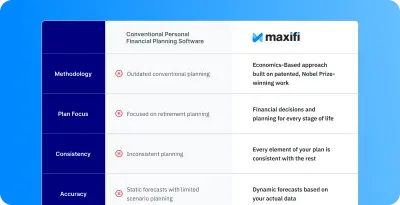
Financial Planning that Puts You in Control
FAQs About Immediate Annuities
Important Considerations
This content reflects financial and tax rules governing annuity products as of 2025 and is subject to change through legislative action, regulatory updates, or insurance policy revisions. Factors such as interest rates, payout options, tax treatment, QLAC contribution limits, Required Minimum Distribution ages, and Net Investment Income Tax thresholds are periodically adjusted by financial institutions and government agencies, which may alter the income amounts or tax implications associated with immediate annuities in future years.
This content is for educational and informational purposes only and should not be construed as financial, legal, tax, or investment advice. The information provided represents general educational material about immediate annuities, their payout structures, and related retirement planning concepts, not personalized guidance for any individual's specific circumstances. Payment amounts, costs, taxation, QLAC eligibility, state guaranty association coverage limits, and cooling-off period provisions vary by contract type, insurer, state of residence, and funding source. The examples, comparisons, and calculations discussed are for educational illustration only and do not constitute recommendations for any individual's financial decisions.
Individual retirement income and annuity purchase decisions must be evaluated based on your unique financial situation, including income level, age, risk tolerance, tax bracket, family circumstances, health status, state insurance laws, and overall retirement planning objectives. What may be considered standard in financial planning literature may not suit every investor. Please consult with a qualified financial advisor, tax professional, or retirement planner for personalized guidance before purchasing or modifying any annuity contract. This educational content does not establish any client or advisory relationship.
Disclaimer
This article provides general educational information only and does not constitute legal, tax, or estate planning advice. Beneficiary designations, estate laws, and tax regulations vary significantly by state, account type, and individual circumstances. The information presented here is not intended to be a substitute for personalized legal or financial advice from qualified professionals such as estate planning attorneys, tax advisors, or financial planners. Beneficiary rules are subject to change and can have significant legal and tax implications. Before designating, changing, or making decisions about beneficiaries, you should consult with appropriate professionals who can evaluate your specific situation and applicable state and federal laws.